



 Ask Sencha AI
Creating an Ext JS Login/Registration Form in 3 Easy Steps
April 21, 2020
5661 Views
Get a summary of this article:
ExtJS includes form components that allow you to quickly and easily create fully functional and validated forms. In this example, we show how to create a login/registration form with the following features in minutes using the Ext Js Javascript Web Framework, which will greatly assist you in developing HTML5 applications.
- Adding textfield, numberfield, datefield
- Adding form validation (email, password…)
- Displaying form error messages
- Resetting values
- Processing form values
Login Form
A simple example demonstrating how to create a login form.
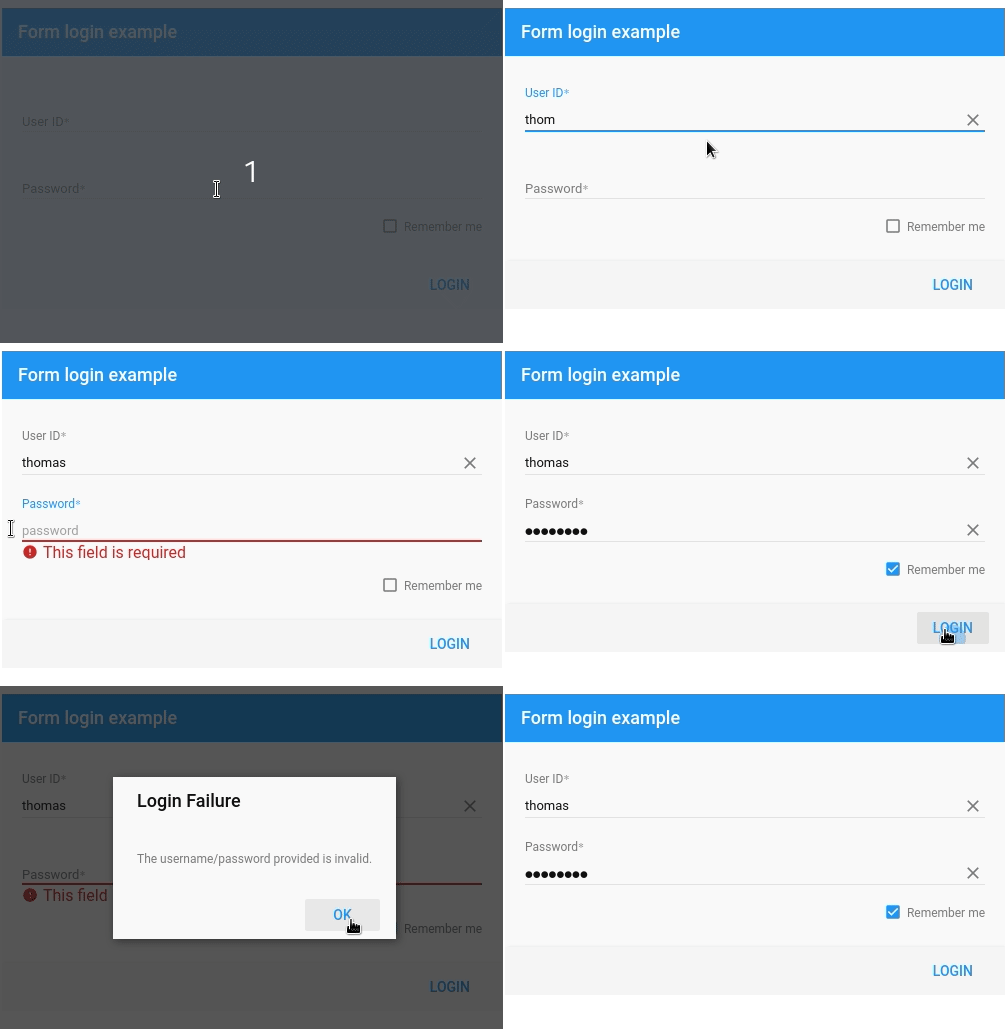
Step 1: Create form configuration
{
	xtype: 'formpanel',
	title: 'Form login example',

	bodyPadding: 20,
	width: 500,

	bbar: ['->',{
    	   text: 'Login',
    	   handler: 'onLogin'
	}],

	items: [{
    	   xtype: 'textfield',
    	   label: 'User ID',
    	   name: 'user',
    	   placeholder: 'user id',
	}, {
    	xtype: 'passwordfield',
    	   label: 'Password',
    	   name: 'pass',
    	   placeholder: 'password'
	}, {
    	   xtype: 'checkbox',
    	   boxLabel: 'Remember me',
    	   name: 'remember'
	}]
}
Step 2: Add form validation
        //Required field
        allowBlank: false,
        required: true,
        //Custom validator
        validators: function (value) {
	return /^[a-zA-Z]{8,}$/.test(value) ? true : 'Your password must contain at least 8 characters';
}
Step 3: Display error messages
errorTip: {
	anchor: true,
	align: 'l-r?'
},
errorTarget: 'under'
Sencha Fiddle:
Registration Form
A simple example of a registration form with field mask, email validation or selectfield.
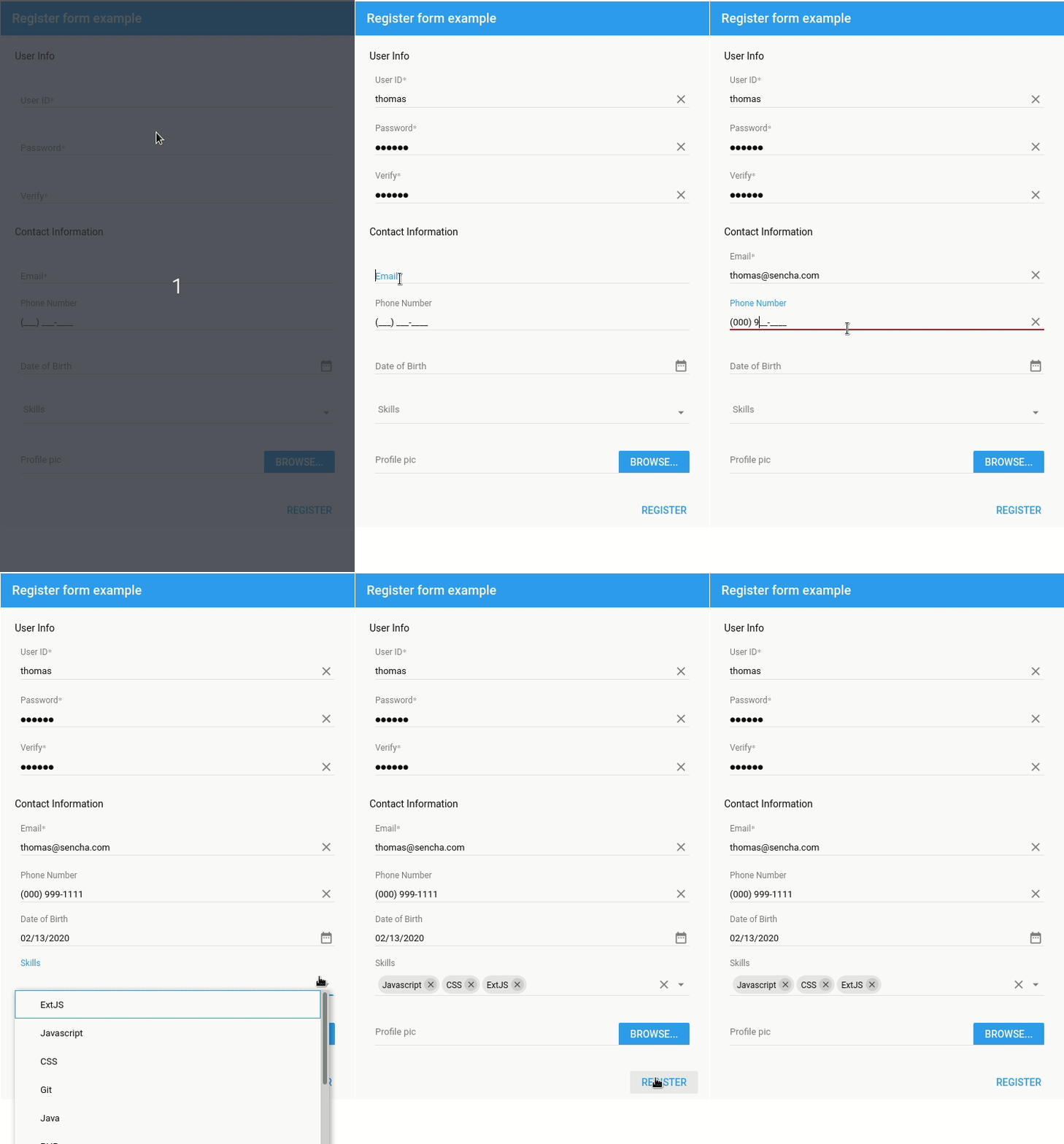
Step 1: Email validation
{
    xtype: 'emailfield',
    label: 'Email',
    name: 'email',
    allowBlank: false,
    required: true,
    //Email validation
    validators: 'email',
    errorTip: {
        anchor: true,
        align: 'l-r?'
    },
    errorTarget: 'under'
}
Step 2: Field Mask
{
    //Field mask
    label: 'Phone Number',
    name: 'phone',
    inputType: 'tel',
    autoComplete: true,
    autoHideInputMask: false,
    inputMask: '(999) 999-9999'
}
Step 3: Selectfield
{
	//Multiple selection
	xtype: 'selectfield',
	label: 'Skills',
	name: 'skills',
	multiSelect: true,
	autoSelect: false,
	clearable: true,
	options: [
    	'ExtJS',
    	'Javascript',
    	'CSS',
    	'Git',
    	'Java',
    	'PHP',
    	'COBOL',
    	'Node.js',
    	'JSON',
    	'HTML5',
    	'RIA',
    	'OOP',
    	'Scrum',
    	'REST',
    	'MVC'
	],
	chipView: {
    	plugins: {
            dataviewtip: {
                align: 'tl-br',
                constrainToView: false,
                delegate: '.x-close-el',
                allowOver: true,
                anchor: false,
                anchorToTarget: false,
                bind: '{record}',
                tpl: 'Remove skill {text}'
            }
    	}
	}
}
Sencha Fiddle:
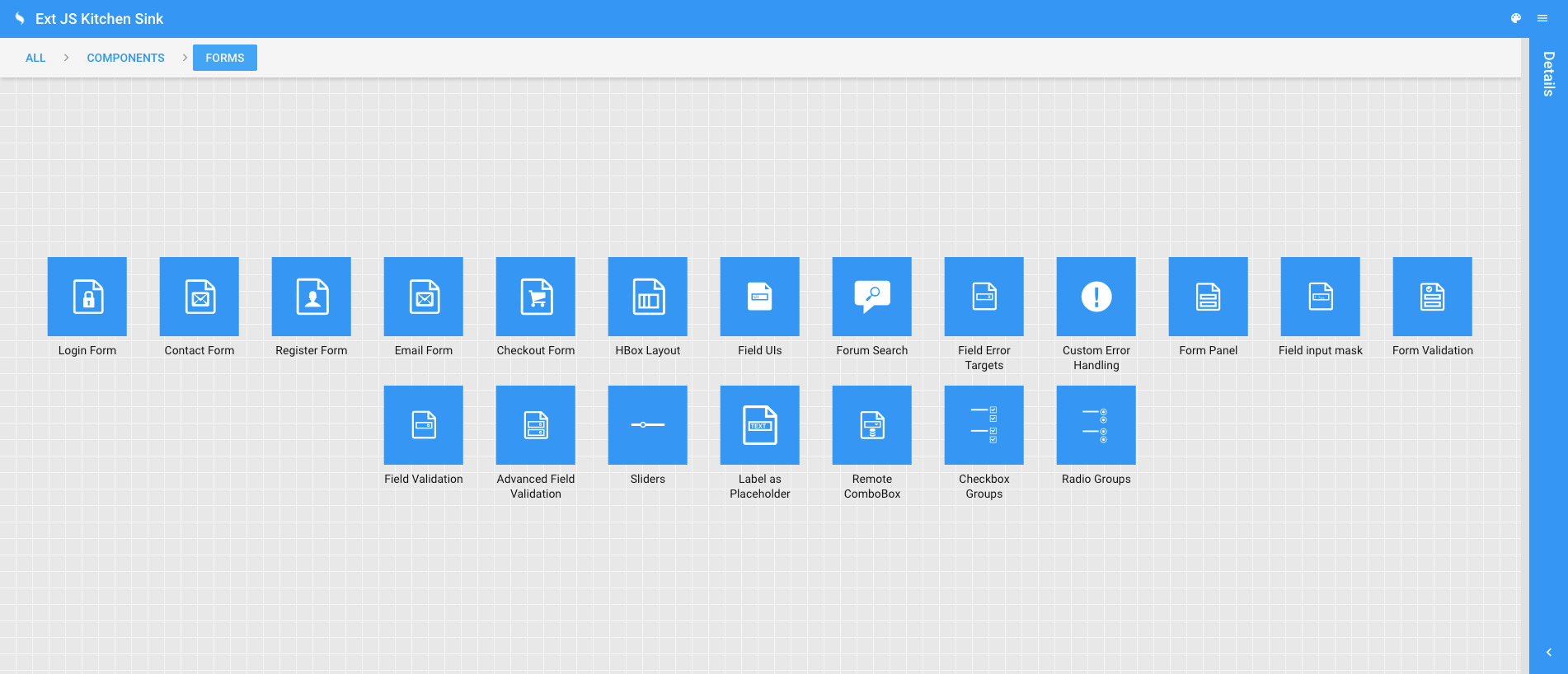
Want more? Get hands on with all of our form components in the Kitchen Sink.
Try Ext JS 7.2
Packed with many enhancements, the newly released Ext JS version 7.2 is the perfect way to jumpstart your app development. If you haven’t already, try the 30-day fully-featured free trial of Ext JS—a robust framework, with 140+ components and many tools (Themer, Architect, Stencils, plugins and more) to create professional looking data-intensive apps.
 2
2
 1
1
Latest Content

How to Handle Millions of Rows in a React Data Grid: Buffered Rendering and Server-Side Data
A React data grid that feels instant with 1,000 rows can freeze with 100,000 and…
October 16, 2026

How to Choose a React Grid Component: 12 Features Enterprise Apps Need
Picking a React grid component looks easy in week one. Every option sorts columns and…
October 16, 2026

Enterprise React Data Grid: The Features Enterprise Teams Need, and What Each Grid Includes
Almost every enterprise React data grid advertises the same features: grouping, pivoting, Excel export, clipboard,…
October 16, 2026