



 Ask Sencha AI
Sencha Test Beta is Now Available
January 20, 2016
1740 Views
Get a summary of this article:
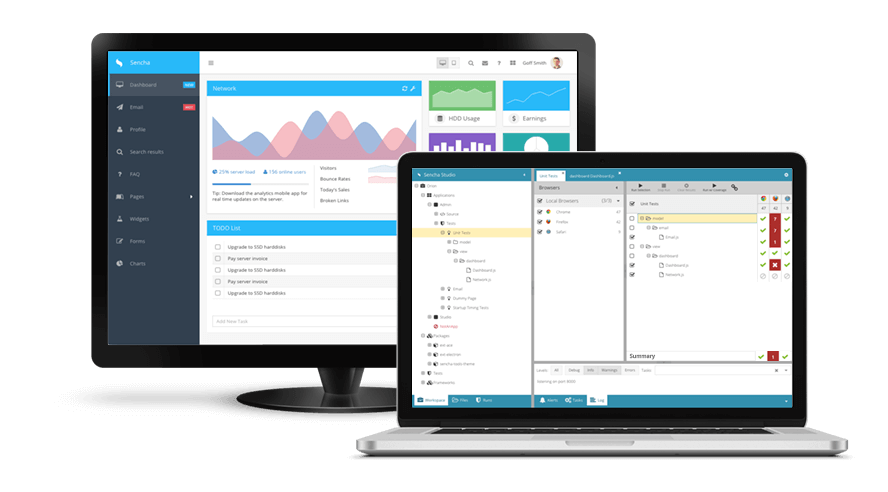
We’re excited to announce that the beta version of Sencha Test is now available. Along with enhancements to the features from the Early Access release, this version also addresses several key issues reported via the Sencha Test forum.
Read the Guides and Documentation
What’s New
In Sencha Test Beta, there are several important changes:
- We added a number of Ext JS specific APIs to improve how you can author tests.
- We improved the Test Playback feature to provide better interaction with Ext JS.
- The Test Results Log generated by the CLI can now be viewed directly in the Studio.
- We improved the connection reliability when running tests on browser farms.
- New configuration options for internal proxy are also available in case you need to work with a specific port.
What is Sencha Test
Sencha Test is a new addition to the Sencha platform that will help you create unit and end-to-end functional tests quickly, and execute them on multiple browsers simultaneously. Under the hood, Sencha Test leverages the powerful Jasmine framework that lets you write tests in JavaScript. The many assertions and matchers along with spies, stubs, and mocks can be used to create robust tests that will help you deliver quality apps. Sencha Test was created with two clear goals in mind:
- Boost developer productivity through unit and functional testing
- Improve the quality of Ext JS apps through end-to-end testing and test automation
We Want Your Feedback
Sencha Test Beta is available for download immediately. Try out Sencha Test with one of your Ext JS apps, use our examples to get started, share your feedback, and report bugs in the Sencha Test forum. We look forward to your feedback.


Latest Content
How to Handle Millions of Rows in a React Data Grid: Buffered Rendering and Server-Side Data
A React data grid that feels instant with 1,000 rows can freeze with 100,000 and…
October 16, 2026
How to Choose a React Grid Component: 12 Features Enterprise Apps Need
Picking a React grid component looks easy in week one. Every option sorts columns and…
October 16, 2026
Enterprise React Data Grid: The Features Enterprise Teams Need, and What Each Grid Includes
Almost every enterprise React data grid advertises the same features: grouping, pivoting, Excel export, clipboard,…
October 16, 2026