



 Ask Sencha AI
What Is DORA? A Complete Guide to the EU’s Digital Operational Resilience Act (2026)
June 17, 2026
2048 Views
Get a summary of this article:
Last Updated: June 2026
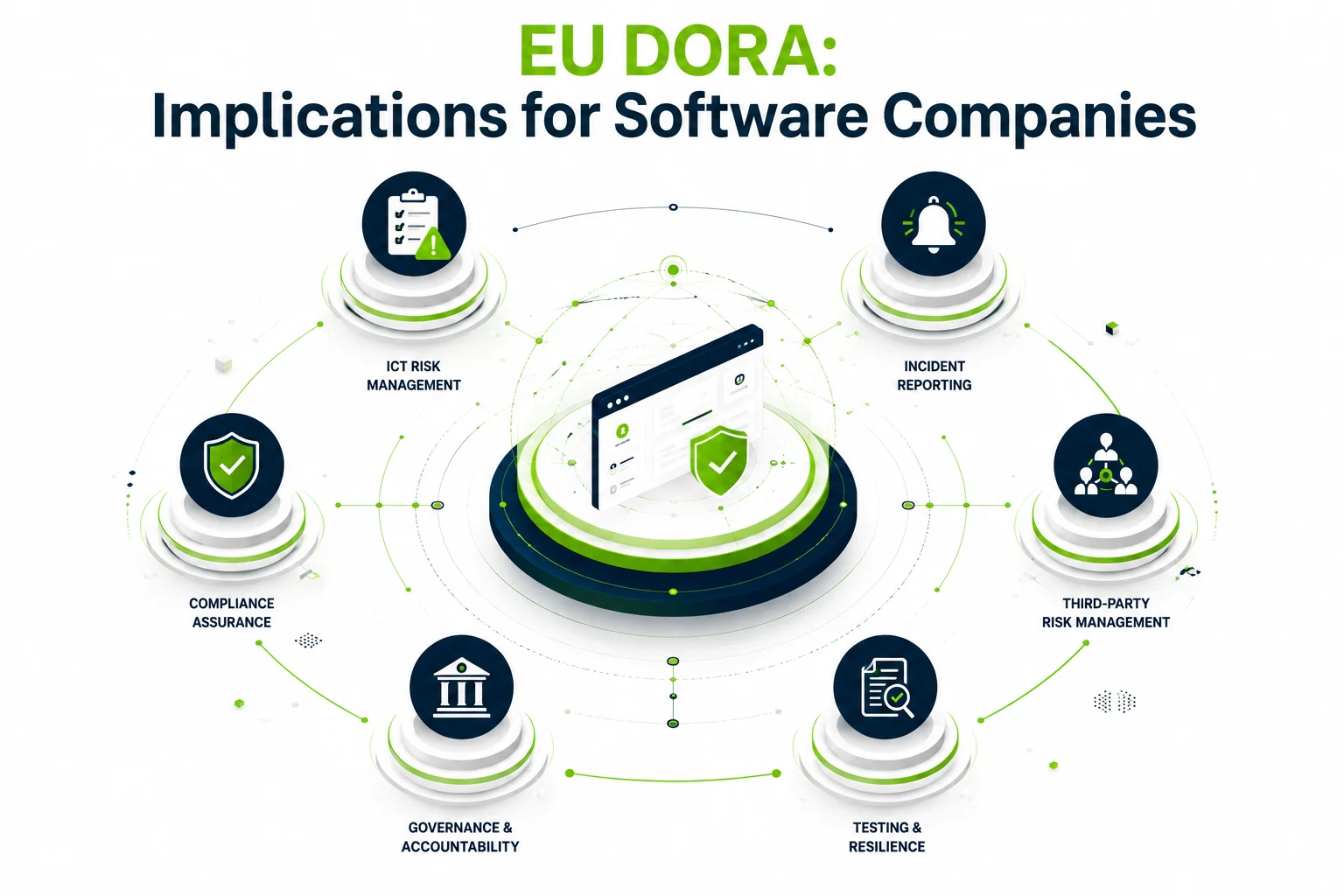
The Digital Operational Resilience Act (DORA) is one of the most significant technology regulations introduced by the European Union in recent years. Effective January 17, 2025, DORA establishes a unified framework to strengthen the digital resilience of financial institutions and the technology providers that support them.
Quick Answer
- DORA (Digital Operational Resilience Act) is an EU regulation designed to strengthen the digital resilience of financial institutions.
- DORA became applicable on January 17, 2025, across the European Union.
- The regulation focuses on ICT risk management, cyber resilience, incident reporting, operational testing, and third-party technology oversight.
- DORA applies to banks, insurance companies, investment firms, payment providers, and other regulated financial entities.
- The regulation also increases scrutiny of software vendors, cloud providers, and technology partners that support financial organizations.
What Is DORA?
The Digital Operational Resilience Act (DORA) is a European Union regulation that establishes a common framework for managing digital operational resilience across the financial sector. The regulation aims to help financial organizations withstand, respond to, and recover from technology disruptions such as cyberattacks, system failures, software vulnerabilities, and operational outages.
As financial institutions become increasingly dependent on software platforms, cloud services, and third-party technology providers, regulators have placed greater emphasis on operational resilience and technology risk management.
Why Was DORA Introduced?
Financial services organizations rely heavily on digital systems to deliver critical business operations. A technology failure can impact customers, business operations, financial markets, and the broader economy.
DORA was introduced to create a consistent approach to operational resilience across the European financial sector by establishing common requirements for:
- ICT risk management
- Cybersecurity preparedness
- Incident response
- Resilience testing
- Third-party technology oversight
- Business continuity planning
The goal is to ensure financial institutions can continue operating during technology disruptions and recover efficiently when incidents occur.
Who Does DORA Apply To?
DORA applies to a broad range of regulated financial entities, including:
| Financial Entity Type | Covered Under DORA |
|---|---|
| Banks | Yes |
| Insurance Companies | Yes |
| Investment Firms | Yes |
| Payment Providers | Yes |
| Credit Institutions | Yes |
| Financial Market Infrastructure Providers | Yes |
| FinTech Organizations | In many cases |
The regulation also introduces oversight requirements related to ICT third-party service providers that support critical financial operations.
What Does DORA Cover?
1. ICT Risk Management
Organizations must establish processes to identify, assess, monitor, and manage technology-related risks.
Key areas include:
- Cybersecurity controls
- Technology governance
- Operational resilience planning
- Business continuity processes
- Risk assessment frameworks
2. ICT Incident Management
Financial institutions must establish procedures for detecting, managing, and reporting significant ICT-related incidents.
Examples include:
- Cyberattacks
- Data breaches
- Service outages
- Critical software failures
3. Digital Operational Resilience Testing
Organizations are expected to regularly evaluate the resilience of their systems.
Testing may include:
- Vulnerability assessments
- Penetration testing
- Recovery testing
- Business continuity exercises
4. ICT Third-Party Risk Management
One of DORA’s most significant areas of focus is third-party technology risk.
Financial institutions are expected to understand:
- Which technology vendors support critical operations
- How vendor risks are managed
- Software maintenance practices
- Security processes
- Business continuity capabilities
5. Information Sharing
DORA encourages collaboration and information sharing related to cyber threats and operational resilience.
Why Are Software Vendors Being Evaluated More Closely?
As organizations review operational resilience programs, many are also reviewing the software vendors and technology providers they depend on.
This often leads to questions regarding:
- Software support policies
- Product lifecycle management
- Security practices
- Vendor documentation
- Incident response processes
- Long-term maintenance commitments
Technology providers may receive increased requests for documentation and operational information as customers strengthen their resilience programs.
How DORA Impacts Application Development Teams
Application teams supporting regulated industries should evaluate several key areas.
Supported Software Versions
Running supported software versions can help organizations maintain access to updates, fixes, and vendor assistance when needed.
Upgrade Planning
Technology modernization initiatives often include reviewing upgrade strategies for critical business applications.
Vendor Relationships
Organizations increasingly evaluate the long-term viability and support commitments of their technology partners.
Operational Resilience
Application platforms play an important role in supporting business continuity and recovery objectives.
DORA and Technology Modernization
For many organizations, DORA has accelerated conversations around:
- Legacy system modernization
- Software lifecycle management
- Security best practices
- Vendor support models
- Operational risk reduction
Rather than viewing DORA solely as a compliance initiative, many organizations are using it as an opportunity to review technology strategy and strengthen operational resilience.
Steps Organizations Can Take
Step 1: Review Critical Applications
Identify systems that support important business operations.
Step 2: Assess Software Support Status
Determine whether critical platforms are actively maintained and supported.
Step 3: Evaluate Vendor Relationships
Review support agreements, maintenance policies, and operational practices.
Step 4: Strengthen Resilience Planning
Ensure business continuity and recovery plans are regularly tested and updated.
Step 5: Develop a Modernization Roadmap
Create a strategy for maintaining supported, secure, and resilient application environments.
DORA Checklist for Technology Leaders
- Inventory critical applications
- Review software support status
- Assess third-party technology dependencies
- Evaluate cybersecurity processes
- Review incident response procedures
- Test business continuity plans
- Maintain vendor documentation
- Establish long-term modernization plans
Frequently Asked Questions
What does DORA stand for?
DORA stands for Digital Operational Resilience Act, a European Union regulation focused on strengthening digital resilience in the financial sector.
When did DORA take effect?
DORA became applicable across the European Union on January 17, 2025.
Does DORA apply only to banks?
No. DORA applies to a broad range of regulated financial entities, including banks, insurance companies, investment firms, payment institutions, and other financial organizations.
Why are software vendors being reviewed under DORA?
Financial organizations are expected to manage risks associated with third-party technology providers, which often results in additional vendor assessments and documentation reviews.
Does DORA require technology modernization?
DORA does not mandate specific software products or technologies. However, many organizations use DORA initiatives to review software lifecycle management, support status, operational resilience, and modernization strategies.
Final Thoughts
DORA represents an important evolution in how financial organizations approach operational resilience, technology governance, and third-party risk management.
As digital systems become increasingly critical to business operations, organizations are paying closer attention to software support, technology lifecycle management, vendor relationships, and resilience planning. Understanding the principles behind DORA can help technology leaders make more informed decisions about maintaining secure, resilient, and sustainable application environments.
Disclaimer: This article is provided for informational purposes only and should not be considered legal, regulatory, or compliance advice. Organizations should consult qualified legal and compliance professionals regarding their specific obligations under DORA.
 0
0

Latest Content
React Component Library for Data-Heavy Apps: Why 1 Vendor Beats 5
Data-heavy React apps rarely start with five UI vendors. They get there one reasonable decision…
October 21, 2026
How to Standardize on One UI Component Library Across Your React Apps
In most large organizations, every React app has its own UI stack. One team uses…
October 21, 2026
UI Component Library vs Component Framework: What Enterprise React Teams Need
Ask a React team what they use for UI, and you’ll usually hear the name…
October 21, 2026