



 Ask Sencha AI
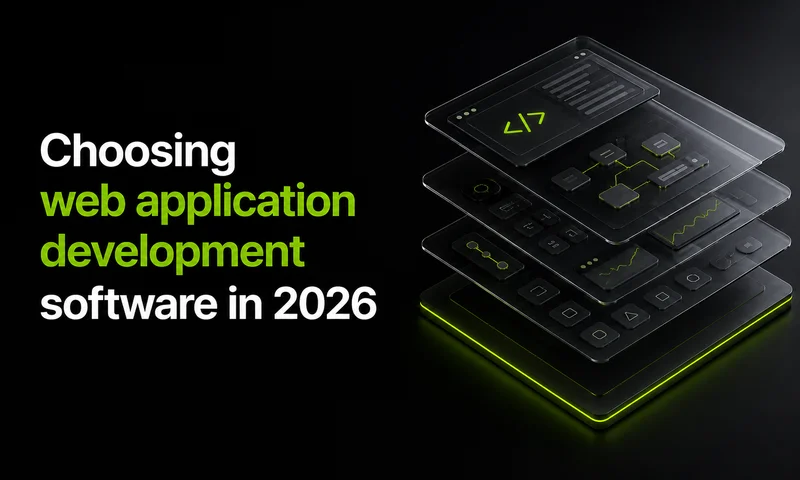
How to Choose the Best JavaScript Frameworks in 2026: Enterprise Developer’s Guide
July 24, 2024
50852 Views
Get a summary of this article:
- Data-intensive enterprise apps (dashboards, ERP, CRM, real-time analytics): Ext JS 8.0: 140+ components, 1M+ record grid, WCAG 2.1 built-in, Fortune 500 proven
- Consumer-facing apps, SPAs, marketing platforms: React 19.2.1 has the largest talent pool, 44.7% developer adoption, broadest ecosystem
- Large teams needing TypeScript-first consistency: Angular 21, opinionated structure, Google LTS support (Note: Angular 17 is EOL since May 2025: upgrade now)
- Small teams or migrating from jQuery: Vue 3.5, gentlest learning curve, 93% satisfaction, Vapor Mode now stable
- Already on React but need enterprise components: ReExt 1.2, access all 140+ Ext JS 8.0 components inside your existing React app.
Why This Decision Matters More Than Ever
Every framework decision your team makes today shapes your development velocity, maintenance costs, and Application Development Software performance for the next 5–10 years. We have spent 25+ years building Ext JS specifically for the enterprise use cases where other frameworks fall short. The numbers support this. According to the Stack Overflow Developer Survey 2025, JavaScript remains the most-used language for the 13th consecutive year. But popularity does not equal suitability. The 44.7% of developers using React are mostly building consumer-facing applications. This guide explains why and gives your team a clear framework for making the right decision.
What Enterprise Applications Actually Need
Most enterprise UI framework comparisons focus on what frameworks can do in demos and tutorials. Enterprise applications have different requirements that demos never show.
Data at real scale
Enterprise applications do not handle 50-row tables. They handle financial trading data with thousands of securities being updated in milliseconds. They handle inventory systems with 500,000 SKUs. They handle IoT sensor dashboards with continuous real-time streams. The framework that handles a 100-row demo and the framework that handles 1,000,000 rows in production are not the same framework.
Components that are production-ready on day one
Building a professional data grid with sorting, filtering, grouping, inline editing, virtual scrolling, and accessibility from scratch takes 3–6 months. Building a calendar, tree panel, pivot table, or chart from scratch takes additional months. Ext JS 8.0 ships all of these: 140+ components, tested, accessible, and production-ready. React, Angular, and Vue ship none of them. You assemble them yourself from third-party libraries — our comparison of JavaScript UI component libraries covers the main options.
Accessibility that is built in, not bolted on
WCAG 2.1 compliance is now mandatory for most enterprise applications, especially in finance, healthcare, and government. Ext JS 8.0 has ARIA accessibility built into every one of its 140+ components. JAWS, Narrator, TalkBack, and VoiceOver are all tested. With React or Vue, every custom component requires manual accessibility implementation. That is hundreds of hours of additional work on every project.
Support
Community forums are not enterprise support. When a production trading platform goes down at 3 am, your team needs to reach someone who knows the codebase. Ext JS 8.0 comes with Sencha professional support: guaranteed response times, direct access to engineers, and multi-year LTS roadmaps. React has no official support. Vue has limited commercial options. Angular has Google’s LTS but no direct support channel.
Backward compatibility that protects your investment
Enterprise applications run for 10+ years. A framework that introduces breaking changes every 6 months is a liability, not an asset. We built Ext JS with backward compatibility as a core commitment: applications written for Ext JS 5.0 run on Ext JS 8.0 with minimal changes. Angular releases major versions every 6 months. Angular 17 is already end-of-life as of May 2025.
Also Read: Framework vs Library – Key Differences Explained 2026
Ext JS 8.0 vs The Alternatives: Honest Comparison
We are the makers of Ext JS. We are not a neutral reviewer. But we can be honest about where each framework fits best. A full side-by-side breakdown is available in our Ext JS vs React vs Angular comparison.
Where React wins
React 19.2.1 is the right choice for consumer-facing applications, marketing websites, content platforms, and SPAs where ecosystem flexibility matters most. Its 44.7% developer adoption means the largest talent pool. If you are building a public-facing product with moderate data complexity, React is a strong choice. For React teams who need enterprise-grade data components, ReExt 1.2 gives you access to all 140+ Ext JS components without leaving React.
Where Angular wins
Angular 21 is the right choice for large teams that need enforced consistency and TypeScript-first architecture. Its opinionated structure scales well across 50+ developer organisations. If your team is already on Angular 21 and your data requirements are moderate, staying on Angular is sensible. Angular 17 users need to upgrade immediately: it reached end-of-life in May 2025.
Where Vue wins
Vue 3.5 is the right choice for teams transitioning from jQuery or legacy codebases, and for applications requiring progressive enhancement. Vue 3.5 Vapor Mode is now stable: it bypasses the Virtual DOM entirely for eligible components, delivering up to 36% performance gains. Its 93% developer satisfaction rate reflects a framework that genuinely delights developers.
Where Ext JS 8.0 wins
And this is where we focus. Every application that needs to handle large datasets, complex data visualisation, enterprise-grade grids, or professional UI without months of custom development. Financial dashboards. ERP systems. CRM platforms. Operational monitoring. Healthcare record systems. Manufacturing dashboards. If your application fits these categories, Ext JS 8.0 is not one option among many: it is the right answer.
Performance: The Numbers That Matter
We benchmark with realistic enterprise data volumes, not 50-row demos.
Data grid performance (2026 benchmarks):
| Technique | Best Used For | Performance Characteristics | Architectural Value |
|---|---|---|---|
| platformConfig | Static configuration tweaks at startup | Very low overhead | Keeps unified views declarative and clean |
| responsiveConfig | Live layout changes during resize/orientation events | Powerful, but should be used selectively | Supports dynamic adaptation at runtime |
| Application Profiles | Major UI differences across device classes | Efficient and maintainable | Separates views cleanly while sharing core logic |
| Sencha Cmd Build Profiles | Production bundle optimization | Strong positive impact | Delivers lightweight platform-specific assets |
What is New in Ext JS 8.0
Released in April 2026, Ext JS 8.0 is our most significant release in years. For the full release breakdown, see What’s New in Ext JS 8.0.
Digital Signature Pad
Native signature capture built directly into the framework. JPG, PNG, and SVG export formats. Undo/redo functionality and colour picker included. Fully responsive across desktop and mobile. Citigroup uses this for digital transaction approval workflows: no third-party signature library needed.
QR Code Reader and Generator
Full QR handling built in: URLs, vCard, Wi-Fi credentials, payments, geolocation, calendar events, SMS. Renders as SVG, Canvas, or PNG. Motorola Solutions uses this for public safety equipment tracking. Previously, this required a separate library with its own integration and licensing.
Font Awesome 7 Integration
2,000+ professional icons as the default icon set with full cheat sheet alignment and optimised rendering. Eliminates icon library management overhead while ensuring consistent visual design across enterprise applications.
Column Virtualisation
Horizontal buffering handles datasets with 1,000+ columns. Only visible cells render: maintaining smooth scrolling and interaction regardless of data complexity. Directly addresses feedback from our banking and energy sector customers, managing complex financial and operational datasets.
Lockable Grid Plugin
Native column locking with synchronised scrolling, compatible with selection models, editing, and summary features. Enterprise financial dashboards require fixed reference columns while scrolling through wide datasets.
ES2025 Support
Full ECMAScript 2025 support with updated Closure Compiler integration. Reduces polyfill dependency while maintaining browser compatibility for enterprise environments with controlled browser policies.
ARIA Accessibility
Every component is fully WCAG 2.1 compliant. JAWS, Narrator, TalkBack, and VoiceOver compatibility tested and verified. Built-in, not bolted on.
Total Cost of Ownership: The Real Calculation
Framework cost extends far beyond licensing. Here is the honest 5-year TCO calculation. The licensing trade-off itself is covered in more depth in open-source vs commercial front-end frameworks.
React approach for a data-intensive enterprise application
- AG-Grid Pro licensing: $995 per developer per year × 10 developers = $9,950/year
- Charting library (Highcharts or similar): $2,000–$5,000/year
- Form validation, date picker, tree component: additional libraries, additional licensing
- Integration time: 30–40% of development time spent on library assembly and maintenance
- No official support: community forums only
- Breaking changes in each major React version, requiring updates across all integrated libraries
Ext JS 8.0 approach
- Single commercial license covers all 140+ components
- No third-party grid, chart, form, or icon library licensing
- Professional Sencha support included
- Backward compatibility protects your investment across versions
- Development time focused on business logic, not library integration
Framework Comparison Matrix (2026)
| Criterion | React 19.2.1 | Vue 3.5 | Angular 21 | Ext JS 8.0 |
|---|---|---|---|---|
| 1M+ record performance | No | No | Partial | Yes |
| Pre-built components | 20–30 | 30–40 | 50–60 | 140+ |
| Learning curve | Moderate | Easy | Moderate | Moderate |
| Professional enterprise support | No | Partial | Partial | Yes |
| Backward compatibility | Partial | Yes | Partial | Yes |
| ARIA accessibility built-in | Partial | Partial | Yes | Yes |
| Data grid: native | No | No | No | Yes |
| Digital Signature Pad | No | No | No | Yes |
| QR Code built-in | No | No | No | Yes |
| Version (April 2026) | 19.2.1 | 3.5 | 21 | 8.0 |
| Best for | General UI | Progressive apps | Large teams | Enterprise data apps |
When Ext JS is the Right Choice
Choose Ext JS 8.0 when:
- Your application displays 10,000+ rows of data with real-time updates
- You need advanced grids with sorting, filtering, grouping, inline editing, and virtual scrolling
- Building financial dashboards, trading platforms, ERP, or CRM systems
- Your application requires WCAG 2.1 accessibility compliance
- You need 100+ professional UI components without custom development
- Your application will run for 5+ years, and backward compatibility matters
- You need professional vendor support with guaranteed response times
- You want development focused on business logic, not library assembly
Step-by-Step Framework Evaluation Guide
Step 1: Define your data requirements
- How many records does your application handle simultaneously?
- Do you need real-time updates: WebSocket, server-sent events?
- What data visualisation is required: grids, charts, pivot tables, heat maps?
- Applications handling 10,000+ records or complex visualisation should evaluate Ext JS first
Step 2: List your component requirements
- What specialised components do you need beyond basic buttons and inputs?
- Grids, calendars, trees, charts, signature pads, QR codes, file uploaders
- Each custom component takes weeks to months to build and maintain
- Count the components Ext JS 8.0 ships vs what you would need to build or license separately
Step 3: Build a proof of concept
- Implement your most complex data feature in your top 2 frameworks
- Use realistic data volumes: not 50 rows, use 50,000
- Measure development time, not just the result
- A 2-week POC prevents months of regret
Step 4: Calculate 5-year TCO
- Developer time on library integration vs business logic
- Third-party licensing costs that compound annually
- Maintenance overhead from multiple library update cycles
- Support costs when issues arise in production
Step 5: Evaluate long-term fit
- Will this application exist in 5 years? 10 years?
- Does the framework have a long-term support commitment?
- Is the vendor responsive and financially stable?
- Sencha’s 25+ year history and Fortune 500 customer base answer this for Ext JS
Frequently Asked Questions
1. Is Ext JS only for Fortune 500 companies?
No. Teams and companies of any size use Ext JS. Enterprise features make it especially valuable for large organisations, but smaller teams building data-intensive applications benefit equally from development speed and component quality. If your application handles complex data, Ext JS is worth evaluating regardless of company size.
2. How does Ext JS compare to React for hiring?
React has the larger talent pool at 44.7% developer adoption. Ext JS developers are more specialised but typically more experienced with enterprise development patterns. For data-intensive applications, an experienced Ext JS developer delivers faster than an experienced React developer assembling a library stack for the first time. ReExt 1.2 also means existing React developers can use Ext JS components without learning the full Ext JS framework.
3. Does Ext JS work with React?
Yes. ReExt 1.2 is the official bridge: React teams can use all 140+ Ext JS 8.0 components, including the Digital Signature Pad, QR Code Reader, and Font Awesome 7 integration, within existing React applications. This is the recommended path for React teams who need enterprise-grade data components without a full framework migration.
4. What is the Sencha Upgrade Adviser?
The Upgrade Adviser scans your existing Ext JS codebase and provides specific, actionable migration steps to Ext JS 8.0. It identifies deprecated APIs, suggests replacements, and estimates migration effort. For teams on Ext JS 7.x, upgrading to 8.0 is straightforward: our backward compatibility commitment means minimal breaking changes.
5. How does Ext JS handle TypeScript?
Ext JS 8.0 includes full TypeScript definitions for all 140+ components. TypeScript is supported and recommended for enterprise development. All new Ext JS 8.0 features, including the Digital Signature Pad and QR Code Reader, include complete TypeScript type definitions.
6. What is the difference between Ext JS Classic and Modern toolkit?
Classic toolkit targets legacy browser environments and existing Ext JS applications. Modern toolkit is the recommended path for new development: responsive components designed for touch and desktop, optimised for current browsers. Ext JS 8.0 introduces the Lockable Grid Plugin in the Modern toolkit, specifically.
7. Does Ext JS support server-side rendering?
Ext JS is primarily a client-side framework optimised for complex interactive applications. For applications where SEO is the primary concern and data complexity is low, React with Next.js or Vue with Nuxt may be more appropriate. For data-intensive enterprise applications where SEO is secondary to performance and functionality, Ext JS is the right choice.
8. How often does Ext JS release new versions?
Sencha follows a planned release cycle with major versions, minor updates, and patch releases. Ext JS 8.0 was released in April 2026. We maintain backward compatibility across versions: enterprises can upgrade on their own schedule without being forced by breaking changes. Full LTS support timelines are available through the Sencha support portal.
Conclusion
Framework selection is a strategic decision. For the enterprise applications our customers build- financial dashboards, ERP systems, real-time operational platforms, data-intensive portals- Ext JS 8.0 is not one option among many. It is the framework built for exactly these requirements.
React, Angular, and Vue are strong front-end frameworks for the use cases they are designed for. We respect them. We also know what our customers experience when they choose them for data-intensive enterprise work: months spent assembling and maintaining library stacks, performance issues at scale, accessibility debt, and support gaps when production problems arise.
Ext JS 8.0 exists to solve those problems. One framework. One vendor. One support contract. One upgrade path. One team that has spent 25+ years building exactly what Fortune 500 enterprise teams need.
Evaluate Ext JS 8.0 with your own data. Build a proof of concept. See the performance. Then decide.
 2
2
 4
4
Latest Content
How to Handle Millions of Rows in a React Data Grid: Buffered Rendering and Server-Side Data
A React data grid that feels instant with 1,000 rows can freeze with 100,000 and…
October 16, 2026

How to Choose a React Grid Component: 12 Features Enterprise Apps Need
Picking a React grid component looks easy in week one. Every option sorts columns and…
October 16, 2026
Enterprise React Data Grid: The Features Enterprise Teams Need, and What Each Grid Includes
Almost every enterprise React data grid advertises the same features: grouping, pivoting, Excel export, clipboard,…
October 16, 2026