



 Ask Sencha AI
Subscribe to our newsletter
Be the first to learn about new Sencha resources and tips.
Missed JavaScript Days 2026? The Replays Are Now Available – Watch Now!
In most enterprise React apps, the grid shows up on dozens of screens: orders, customers, invoices, audit logs. Without a shared component, each team configures it from scratch. Currency formats differ, one screen validates edits and another doesn't, and an…

Search for "React grid component," and you will find two very different things. Half the results are about layout grids: rows and columns that arrange panels, cards and forms on a page. The other half are about data grids: interactive…
Set up the Ext JS grid in React with ReExt, then add typed columns, store-backed data, inline editing, grouping and summaries. Full code included. The Ext JS grid has handled data-heavy enterprise screens for years: typed columns, store-backed data, inline…
Almost every business application eventually becomes a grid. Orders, invoices, trades, tickets, inventory, patients, shipments: the data your users care about most usually lands in rows and columns, and they spend hours a day working in that view. That makes…
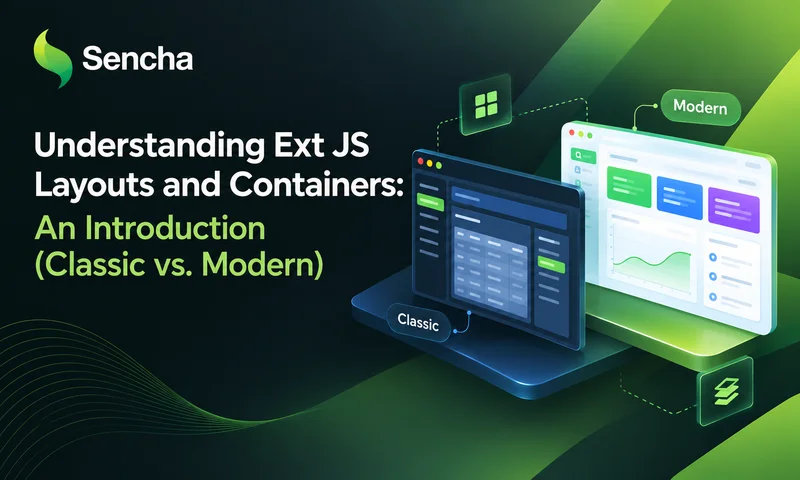
Building complex, responsive, and data-intensive Web applications requires a solid layout engine. In Ext JS, the layout system is the backbone of your Application UI. It automatically handles component sizing, positioning, component nesting, and dynamic window resizing, eliminating the need…

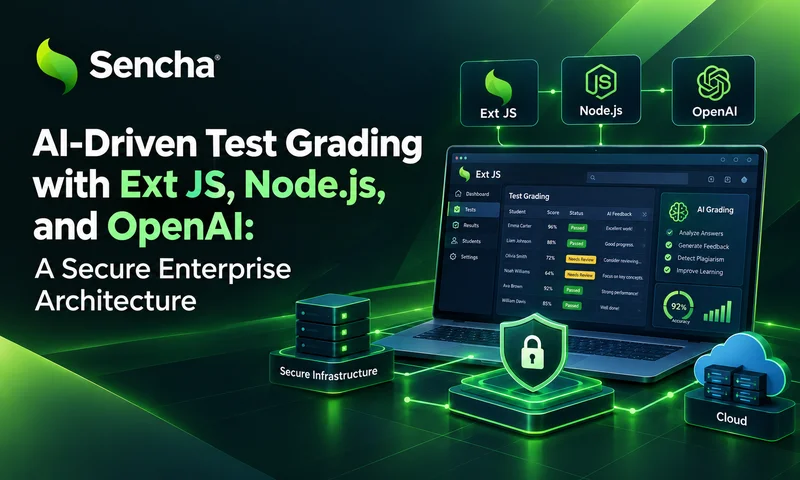
Learn how to build an AI-driven test grading system with Ext JS, Node.js, MySQL, and OpenAI using secure API architecture, deterministic scoring, and human oversight. Automated assessment has become a key capability for modern EdTech platforms, but evaluating open-ended responses…
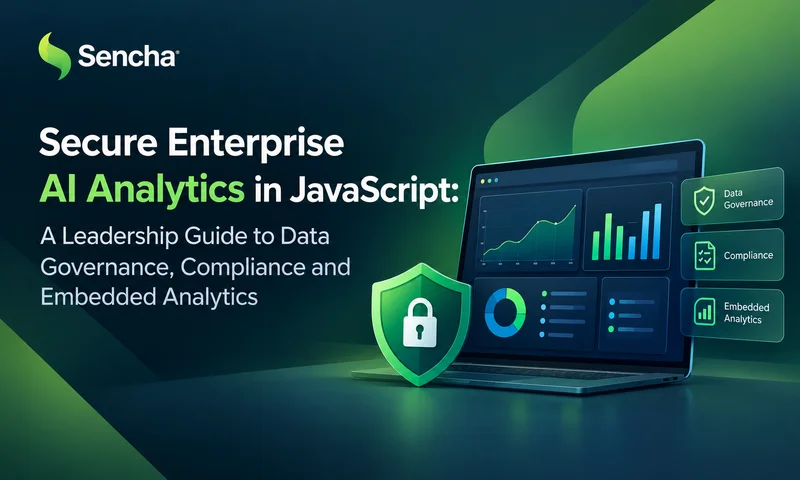
Enterprise analytics is entering a new phase. Business users increasingly expect applications to answer questions in natural language, surface anomalies automatically, explain trends, and provide real-time insights without forcing users to leave the application. For engineering leaders, however, the challenge…
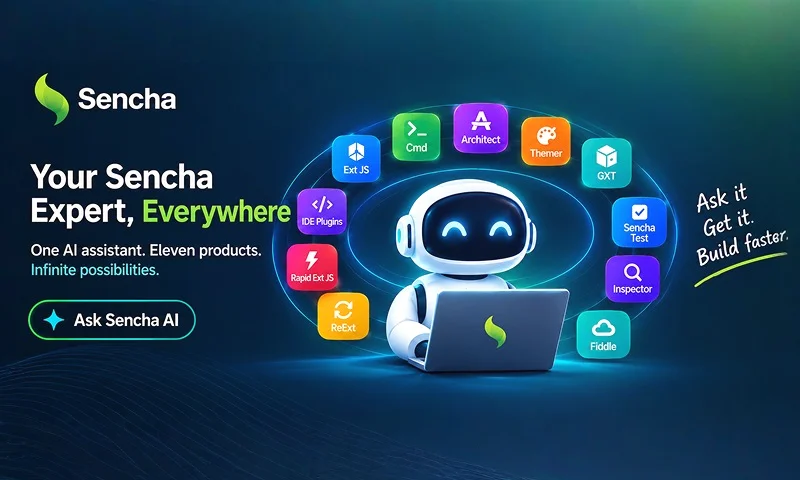
Sencha's AI assistant has grown from a focused Ext JS helper into a product-aware chatbot covering the whole Sencha suite. Here's what's new and why it's great news for developers. When we introduced the Sencha AI Coding Companion back in…
Enterprise applications rarely fail because a grid cannot render a few hundred records. The real challenge begins when that same application evolves into a business-critical platform handling 50,000, 500,000, or more than 1 million records—while users still expect fast search,…
Be the first to learn about new Sencha resources and tips.